






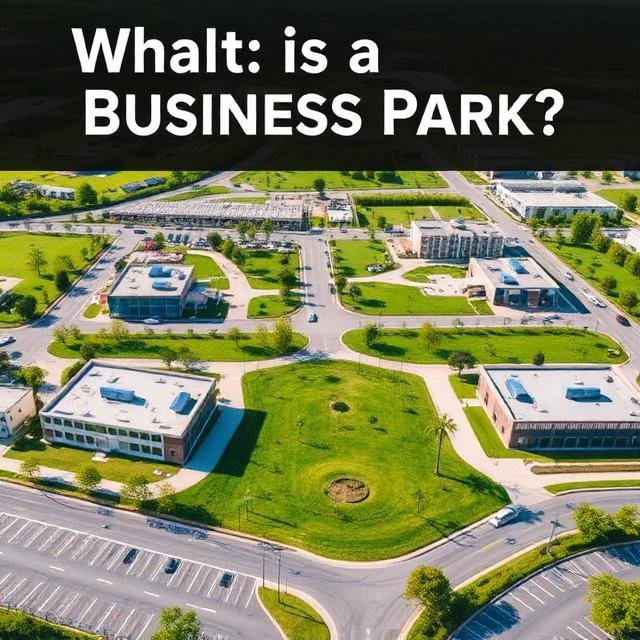
Business parks are everywhere, yet many people still confuse them with industrial zones or office complexes. If you have ever driven past a group of low-rise offices surrounded by green lawns and thought, “This looks calm for a workplace,” you were probably looking at a business park.

In simple terms, a business park is a planned area designed specifically to host businesses, offices, and support services in one organised location. However, the concept goes deeper than just buildings and parking lots. Let’s go through it minutely.
What Is a Business Park?
A business park is a purpose-built commercial area that houses multiple businesses, usually outside crowded city centers. It focuses on functionality, accessibility, and a professional working environment.
Unlike traditional downtown offices, business parks offer:
- Planned infrastructure
- Consistent building standards
- Dedicated parking
- Green spaces
- Lower congestion
Urban planners and real estate developers design these areas to support productivity while reducing operational stress. No honking traffic jams. No fighting for parking. Just work, coffee, and goals.
Key Features of a Business Park
Business parks follow a structured model rather than organic growth. That planning creates several common features.
Planned Layout and Zoning
Local authorities approve business parks under commercial zoning regulations. This ensures compatible businesses operate side by side, which reduces conflicts and improves efficiency.
According to urban development guidelines published by planning departments in the US and UK, zoning improves land-use efficiency and long-term sustainability.
Modern Infrastructure
Most business parks include:
- High-speed internet access
- Reliable power supply
- Wide internal roads
- Stormwater and waste management systems
These features support modern business operations without constant upgrades.
Green and Open Spaces
Business parks often include landscaped lawns, walking paths, and seating areas. Research from urban design studies shows that access to green space improves employee focus and well-being.
Yes, even spreadsheets feel lighter near trees.
Parking and Accessibility
Ample parking remains a significant feature. Business parks usually sit near highways, airports, rail or major roads, making them accessible for employees and clients alike.
Types of Business Parks
Not all business parks serve the same purpose. Developers design them based on economic goals, regional needs, and workforce trends.
Office Business Parks
These parks focus on professional services such as:
- IT companies
- Finance firms
- Consulting agencies
- Corporate headquarters
They emphasise aesthetics, meeting spaces, and employee amenities.
Technology and Science Parks
Technology parks support research-driven organisations. Universities often collaborate with these parks to promote innovation.
According to the International Association of Science Parks (IASP), these environments encourage knowledge sharing and economic growth.
Mixed-Use Business Parks
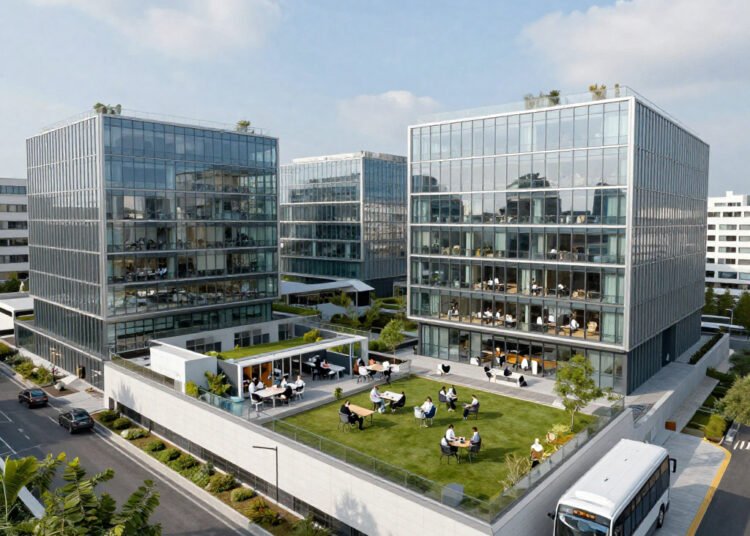
These parks combine offices with:
- Retail outlets
- Cafés and restaurants
- Fitness centers
- Hotels
Mixed-use designs reduce commute stress and improve work-life balance.
Industrial Business Parks
Industrial business parks host light manufacturing, logistics, and warehousing operations. They differ from heavy industrial zones by maintaining cleaner operations and stricter environmental controls.
Business Park vs Industrial Park: Key Differences
People often mix these terms, but important differences exist.
Feature |
Business Park |
Industrial Park |
| Primary Use | Offices & services | Manufacturing & logistics |
| Environment | Landscaped, quiet | Functional, utility-focused |
| Pollution Level | Low | Moderate to high |
| Client Access | High | Limited |
Business parks prioritise people. Industrial parks prioritise production.
Why Do Companies Choose Business Parks?
Businesses do not relocate for fun. They move for efficiency, savings, and growth.
Lower Operating Costs
Office space in city centers often comes with premium pricing. Business parks offer competitive rental rates without sacrificing infrastructure quality.
Improved Employee Experience
Employees value:
- Easier commutes
- Cleaner surroundings
- Better parking
According to workplace studies published by commercial real estate firms like CBRE and JLL, employee satisfaction directly affects productivity and retention.
Scalability
Business parks allow companies to expand within the same area. This flexibility supports long-term planning without disruptive relocations.
Advantages of a Business Park
Business parks bring benefits to both companies and communities.
For Businesses
- Predictable operating environment
- Strong professional image
- Shared services and amenities
For Local Economies
- Job creation
- Increased tax revenue
- Controlled urban expansion
Government economic development agencies often support business parks because they attract investment without overloading city infrastructure.
Disadvantages of a Business Park
No commercial model is perfect.
Limited Public Transport
Some business parks lack strong public transport links, especially in suburban areas. This can affect employees without private vehicles.
Reduced Urban Interaction
Business parks may feel isolated compared to downtown offices. Networking opportunities can decrease without intentional planning.
Smart developers now address this by adding cafés, coworking spaces, and event areas.
How Business Parks Support Sustainable Development
Modern business parks increasingly focus on sustainability.
Green Building Standards
Many parks follow certifications such as:
- LEED (Leadership in Energy and Environmental Design)
- BREEAM (Building Research Establishment Environmental Assessment Method)
These standards reduce energy consumption and environmental impact.
Efficient Land Use
Business parks concentrate commercial activity in designated areas. This reduces urban sprawl and preserves residential zones.
Urban planning authorities often highlight this benefit in development frameworks.
Choosing the Right Business Park for Your Company
Selecting a business park requires strategic thinking.
Location Matters
Look for:
- Proximity to clients
- Access to highways
- Nearby residential areas for staff
Infrastructure Quality
Reliable internet, security systems, and maintenance services should not be negotiable.
Future Growth Potential
Choose a park that allows for expansion without major relocation costs.
The Future of Business Parks
Business parks continue to evolve. Remote work trends have not eliminated them; instead, they have reshaped their design.
Future-focused parks emphasise:
- Flexible office layouts
- Smart building technologies
- Collaboration spaces
According to global real estate outlooks, hybrid work models will increase demand for adaptable commercial spaces rather than eliminate physical offices.
Frequently Asked Questions (FAQ)
What is the main purpose of a business park?
A business park provides a planned, professional environment where companies can operate efficiently with modern infrastructure and shared amenities.
Are business parks only for large companies?
No. Small and medium-sized businesses often benefit the most due to lower costs and scalable space options.
Do business parks increase property value?
Yes. Studies from commercial real estate markets show that well-maintained business parks often improve surrounding property values and economic activity.
Are business parks environmentally friendly?
Many modern business parks follow green building standards and sustainable planning practices, reducing their environmental impact.
Is a business park better than a city office?
It depends on business needs. Business parks suit companies that value space, parking, and cost efficiency, while city offices suit those prioritising foot traffic and central visibility.
Trusted Sources and References
The information in this article aligns with data and guidelines from:
- International Association of Science Parks (IASP)
- Urban Planning Departments (UK & US planning frameworks)
- Commercial real estate research firms such as CBRE and JLL
- Government economic development publications
- Green building certification bodies (LEED, BREEAM)
These organisations provide widely accepted standards and research used across the commercial real estate industry.