






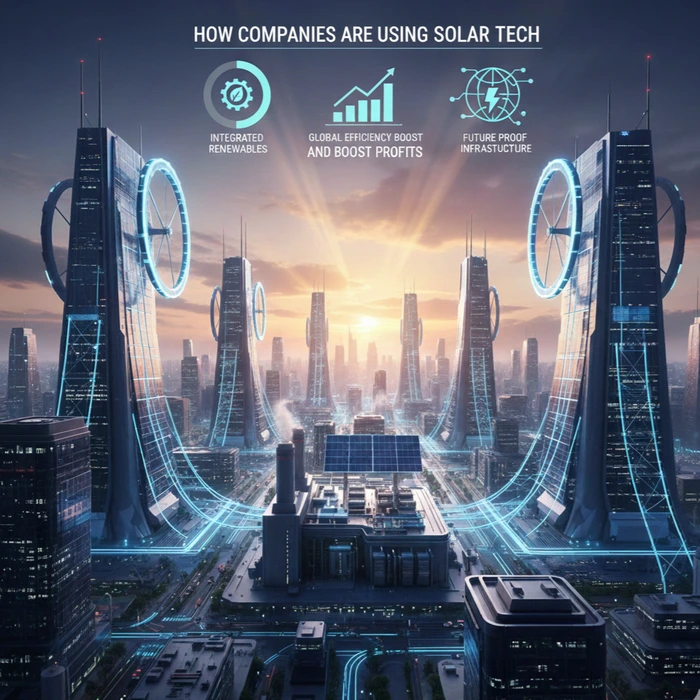
Rising electricity prices and increasing pressure to operate sustainably are forcing businesses to rethink how they manage energy. For many companies, energy costs represent a significant portion of operational expenses. As a result, organizations are actively searching for solutions that can reduce costs while supporting long-term growth.

One of the most effective solutions today is solar energy for businesses. Commercial solar technology allows companies to generate their own electricity, reduce dependence on traditional power grids, and stabilize energy expenses for years.
In recent years, solar power has evolved from an environmentally friendly option into a strategic business investment. Companies across manufacturing, retail, hospitality, technology, and logistics sectors are adopting solar systems to lower operating costs and improve profitability.
This article explores how businesses use solar energy to cut costs, increase profits, and strengthen their long-term financial stability.
What is Solar Technology in Business?
Solar technology refers to systems that convert sunlight into usable electricity. The most common system used by companies is solar photovoltaic (PV) panels installed on rooftops, parking areas, or unused land.
These systems capture sunlight and transform it into electrical energy that can power business operations such as:
- machinery and manufacturing equipment
- office computers and lighting
- heating and cooling systems
- refrigeration units
- data center infrastructure
Modern commercial solar systems are highly efficient and designed to operate for 25–30 years with minimal maintenance. Businesses can either use the electricity immediately, store excess energy in batteries, or send surplus power back to the grid depending on local policies.
Rather than completely replacing traditional electricity sources, solar technology helps businesses reduce dependence on expensive grid power and gain better control over energy costs.
Why Companies Are Turning to Solar Energy?
Companies are adopting solar energy for several economic and strategic reasons.
Rising Electricity Costs
Energy prices continue to increase in many parts of the world. For businesses that rely heavily on electricity, these rising costs directly affect profit margins. Solar power helps companies generate their own energy and reduce exposure to fluctuating electricity prices.
Sustainability Pressure
Customers, investors, and regulators increasingly expect companies to operate responsibly and reduce their environmental impact. Businesses that adopt renewable energy solutions demonstrate their commitment to sustainability.
Improvements in Solar Technology
Over the past decade, solar technology has become more efficient and affordable. Installation costs have dropped significantly, making commercial solar systems accessible to businesses of all sizes.
Reducing Operational Costs With Solar Power
One of the biggest advantages of solar energy is the ability to significantly reduce operating expenses.
Electricity is a frequent cost that affects almost every business. Manufacturing plants, data centers, warehouses, hotels, and offices consume large amounts of power daily.
By generating their own electricity, companies can significantly lower monthly energy bills. In some cases, businesses reduce electricity costs by forty percent or more.
Solar panels generate the most electricity during daylight hours, which often align with standard business operating hours. This reduces the need to purchase expensive peak electricity from the grid.
Over time, the savings from reduced energy bills can be redirected into business expansion, employee development, or new technology investments.
Long Term Financial Stability and Predictable Costs
Many companies now view solar installations as a financial investment rather than an expense.
The initial installation cost is typically recovered through energy savings over time. This recovery period is known as the solar payback period, which usually ranges between three and seven years depending on system size and energy usage.
Once the payback period is completed, businesses essentially generate electricity at minimal cost for the remaining life of the system.
In addition to cost savings, solar installations can increase the value of commercial properties. Buildings equipped with solar energy systems often attract buyers and tenants because of lower operating expenses.
Solar Technology as a Profitable Investment
Many companies consider solar energy as a long term investment rather than an expenditure.
The initial cost of installing solar panels is recovered over time through energy savings. This period is known as the payback period and typically ranges from three to seven years depending on system size and location.
After the payback period, the electricity generated is essentially free. This leads to higher profit margins year after year.
In addition, solar systems increase the value of commercial properties. Buildings with solar installations are more attractive to buyers and tenants due to lower operating costs.
Government Incentives and Financial Benefits
Governments across the world encourage businesses to adopt renewable energy. As a result, many financial incentives are available for companies investing in solar technology.
These incentives may include tax credits, rebates, grants, and accelerated depreciation benefits.
Some regions allow businesses to sell excess electricity back to the grid through net metering programs. This creates an additional revenue stream.
These financial benefits significantly reduce the effective cost of solar systems and improve return on investment.
Solar Energy and Corporate Sustainability Goals
Sustainability is not just a marketing term. It has become a core business strategy.
Companies with strong environmental commitments are more attractive to customers, investors, and partners. Solar energy plays a key role in meeting sustainability goals.
Using solar power reduces carbon emissions and dependence on fossil fuels. This helps companies meet regulatory requirements and environmental standards.
Many large corporations publicly report their energy usage and emissions. Solar technology allows them to demonstrate real progress toward clean energy targets.
Enhancing Brand Image and Customer Trust
Consumers today are more aware of environmental issues than ever before. They prefer to support businesses that take responsibility for their environmental impact.
Companies that use solar energy often promote this effort in their branding and communication. This builds trust and strengthens customer loyalty.
A strong green image can differentiate a business from competitors and influence purchasing decisions.
For some companies, the positive brand value created by solar adoption is as important as the financial savings.
Solar Technology in Manufacturing and Industrial Sectors
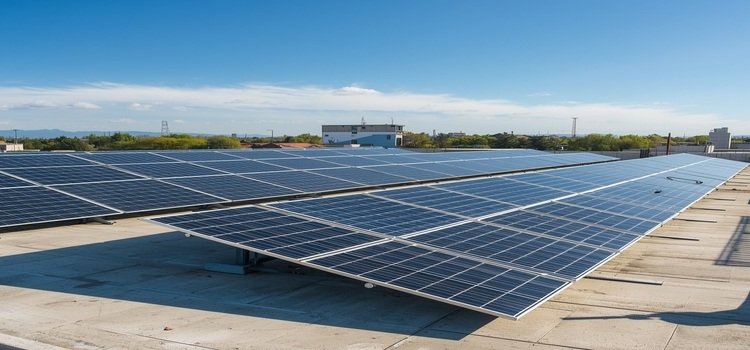
Solar technology provides benefits across many industries.
Manufacturing and Industrial Sector
Manufacturing facilities often consume large amounts of electricity to power machinery, lighting, and production lines. Large factory rooftops provide ideal space for solar installations.
Even small reductions in energy costs can lead to significant profit increases for manufacturing companies.
Office Buildings and Corporate Facilities
Commercial buildings use electricity for lighting, computers, elevators, and climate control systems. Solar systems can reduce energy costs and provide long-term stability for operational expenses.
Retail and Hospitality Businesses
Hotels, restaurants, and retail stores rely heavily on electricity for refrigeration, lighting, and air conditioning. Solar power helps these businesses manage rising energy prices while promoting environmentally responsible practices.
Hotels and resorts often highlight their solar energy systems to attract eco-conscious travelers.
Solar Energy and Business Continuity
Power outages can disrupt operations and cause financial losses. Solar systems combined with battery storage provide backup electricity during grid failures.
This is especially important for organizations such as:
- hospitals
- data centers
- manufacturing plants
- logistics warehouses
Reliable backup energy improves operational stability and protects businesses from costly downtime.
Types of Solar Panels Used by Businesses
Businesses can choose from several types of solar panels depending on their energy needs, available installation space, and budget. Each type offers different efficiency levels and performance characteristics.
1. Monocrystalline Solar Panels
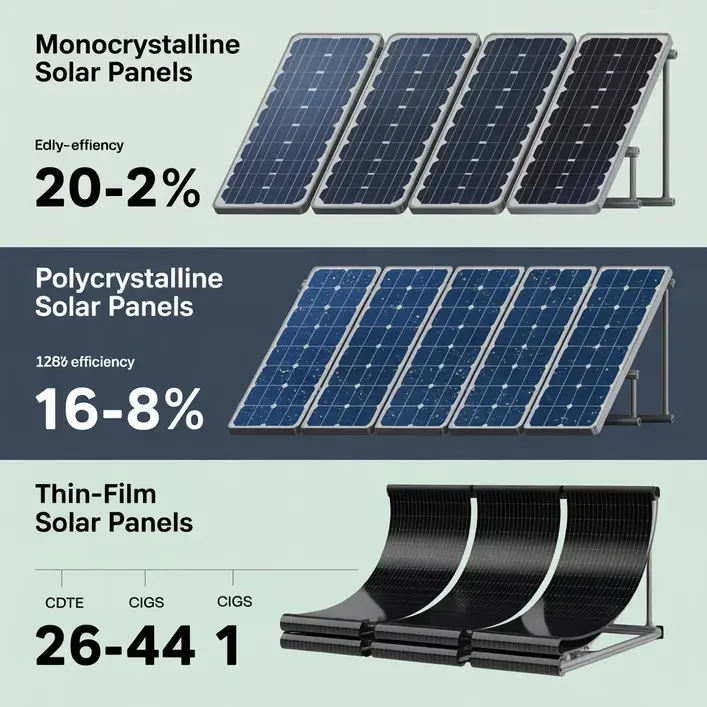
Monocrystalline panels are currently the most widely used solar panels in commercial installations. They are made from a single crystal structure of silicon, which allows electrons to move more efficiently and produce more electricity.
These panels typically achieve 20–24% efficiency, making them ideal for factories, office buildings, and facilities with limited roof space. Their long lifespan and high performance make them the preferred option for many commercial solar projects.
Key Advantages
- Highest efficiency among mainstream solar panels
- Long lifespan (25–30 years)
- Better performance in limited space
Many leading solar manufacturers such as LONGi Green Energy Technology specialize in producing high-efficiency monocrystalline silicon wafers and modules used in commercial solar systems worldwide.
2. Polycrystalline Solar Panels
Polycrystalline panels are made by melting multiple silicon fragments together. They are slightly less efficient than monocrystalline panels but are more affordable.
Their efficiency usually ranges between 16–18%, making them suitable for warehouses, parking structures, and large rooftops where space is not a major constraint.
Although polycrystalline panels are gradually being replaced by newer technologies, they still remain a cost-effective option for large-scale installations.
3. Thin-Film Solar Panels
Thin-film solar panels are produced by depositing photovoltaic materials such as cadmium telluride (CdTe) or copper indium gallium selenide (CIGS) onto a flexible surface.
These panels are lightweight and flexible but have lower efficiency, usually 10–13%. They are commonly used in specialized commercial applications such as large industrial roofs, building-integrated solar panels, or portable energy systems.
Thin-film technologies are also being used in innovative projects such as floating solar farms and large utility-scale installations.
Emerging High-Efficiency Solar Technologies
While traditional silicon panels dominate the market today, several next generation solar technologies are rapidly transforming the renewable energy industry.
1. Bifacial Solar Panels
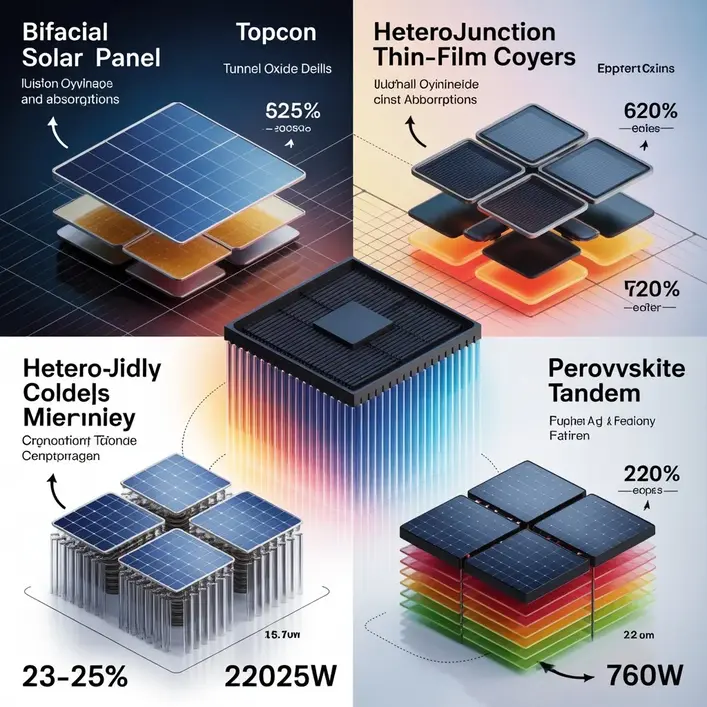
Bifacial panels capture sunlight from both the front and back sides of the panel. The rear side absorbs reflected sunlight from the ground, increasing total energy production.
These systems can produce 5–30% more electricity than traditional single-sided panels depending on installation conditions.
Commercial modules launched in 2025 offer power outputs between 620 W and 760 W with efficiencies above 23%, making them suitable for large commercial installations.
2. TOPCon Solar Technology
TOPCon (Tunnel Oxide Passivated Contact) is one of the fastest-growing solar cell technologies today. It improves energy efficiency by reducing electrical losses within the solar cell.
TOPCon panels can achieve efficiencies of 22–25%, making them a popular choice for modern industrial solar projects and smart factories.
This technology is rapidly replacing older PERC solar cells in many new installations.
3. Heterojunction (HJT) Solar Panels
HJT technology combines crystalline silicon with thin-film layers to improve solar cell efficiency and durability.
Some commercial HJT modules already reach efficiencies above 23% and offer improved performance in high temperatures and low-light conditions.
One example is the advanced HJT module technology developed at the Italian photovoltaic manufacturing plant 3Sun, which produces bifacial heterojunction solar panels for global markets.
4. Perovskite Tandem Solar Cells (Next-Generation Technology)
Perovskite solar cells are among the most promising next-generation photovoltaic technologies currently under development.
When combined with traditional silicon cells in tandem configurations, researchers have demonstrated conversion efficiencies approaching 30%, significantly higher than conventional solar panels.
Although large-scale commercialization is still in progress, many energy companies and research institutions are investing heavily in this technology.
5. Quantum Dot Solar Technology
Another emerging innovation is quantum dot solar technology, which uses nanoscale semiconductor particles to capture a wider spectrum of sunlight.
Partnerships between companies like First Solar and advanced materials developers are exploring the use of quantum dots to significantly improve solar panel efficiency.
Scientists believe this technology could potentially double the efficiency of solar energy conversion in the future by capturing more photons from sunlight.
Smart Solar Technologies Improving Energy Production
Modern commercial solar systems are also integrating advanced technologies to maximize efficiency and energy output.
Solar Tracking Systems
Solar tracking systems automatically adjust the angle of solar panels to follow the sun throughout the day.
Companies developing advanced trackers have created systems that allow each row of panels to move independently, increasing total electricity generation.
Newer tracking systems even use AI and weather forecasting data to protect solar panels from extreme weather such as hailstorms.
Innovative Solar Projects by Companies
Businesses worldwide are implementing solar energy at massive scales.
For example, solar manufacturers such as Saatvik Green Energy have supplied solar modules for large renewable projects, including floating solar installations and large rooftop systems for industrial facilities.
Floating solar systems are becoming increasingly popular because they allow companies to install solar panels on water reservoirs, reducing land use while increasing energy production.
Future Innovations in Solar Energy
The solar industry is rapidly evolving, and several futuristic technologies are currently being developed.
One ambitious concept is space based solar power, where satellites collect solar energy in space and transmit it to Earth using wireless energy transmission systems.
A U.S. startup, Aetherflux, is exploring this technology by developing satellites that capture solar energy in orbit and send it back to ground stations using laser transmission.
Although still experimental, such innovations highlight the enormous potential of solar energy for the future.
Solar Energy for Small and Medium Businesses
Solar technology is no longer limited to large corporations. Small and medium-sized businesses are also adopting solar power.
Flexible financing models such as solar leases and power purchase agreements (PPAs) allow businesses to install solar systems with minimal upfront investment.
These models enable companies to start saving on electricity costs almost immediately while paying for the system gradually.
The Future of Solar Energy in Business
Solar energy is expected to play an increasingly important role in global business operations.
As energy demand continues to grow and sustainability regulations become stricter, companies investing in renewable energy today will be better positioned for the future.
Solar systems also provide scalable energy solutions, meaning businesses can expand their solar capacity as their energy needs grow.
Organizations that adopt solar technology early often gain a competitive advantage through lower operating costs and stronger environmental credibility.
Challenges of Solar Adoption and How Businesses Overcome Them
Despite its many advantages, solar adoption can present some challenges.
The initial installation cost and space requirements may discourage some businesses from investing in solar systems.
However, careful planning, government incentives, and flexible financing options have made solar technology more accessible than ever.
Most companies find that the long-term financial and environmental benefits outweigh the initial investment.
Conclusion
Solar technology has become a powerful tool for modern businesses seeking to reduce costs and increase profitability.
By generating their own electricity, companies can significantly lower energy expenses, stabilize operating costs, and protect themselves from rising electricity prices.
In addition to financial benefits, solar energy strengthens corporate sustainability efforts and enhances brand reputation.
As technology continues to improve and renewable energy becomes more accessible, solar power will play an even greater role in shaping the future of business.
Frequently Asked Questions
How does solar energy help businesses reduce costs?
Solar systems allow businesses to generate their own electricity, reducing dependence on grid power and lowering monthly energy expenses.
Is solar energy a profitable investment for companies?
Yes. Most businesses recover the installation cost within three to seven years and continue benefiting from low-cost electricity for decades.
Which industries benefit the most from solar energy?
Manufacturing, retail, hospitality, offices, warehouses, and data centers benefit significantly because of their high electricity usage.
Can businesses sell excess solar energy?
In many regions, companies can send surplus electricity back to the grid through net metering programs and receive credits or payments.
How long do commercial solar panels last?
Most solar panels are designed to operate efficiently for 25 to 30 years with minimal maintenance.
Can small businesses afford solar installations?
Yes. Financing options such as solar leases and power purchase agreements allow small businesses to adopt solar energy without large upfront costs.