





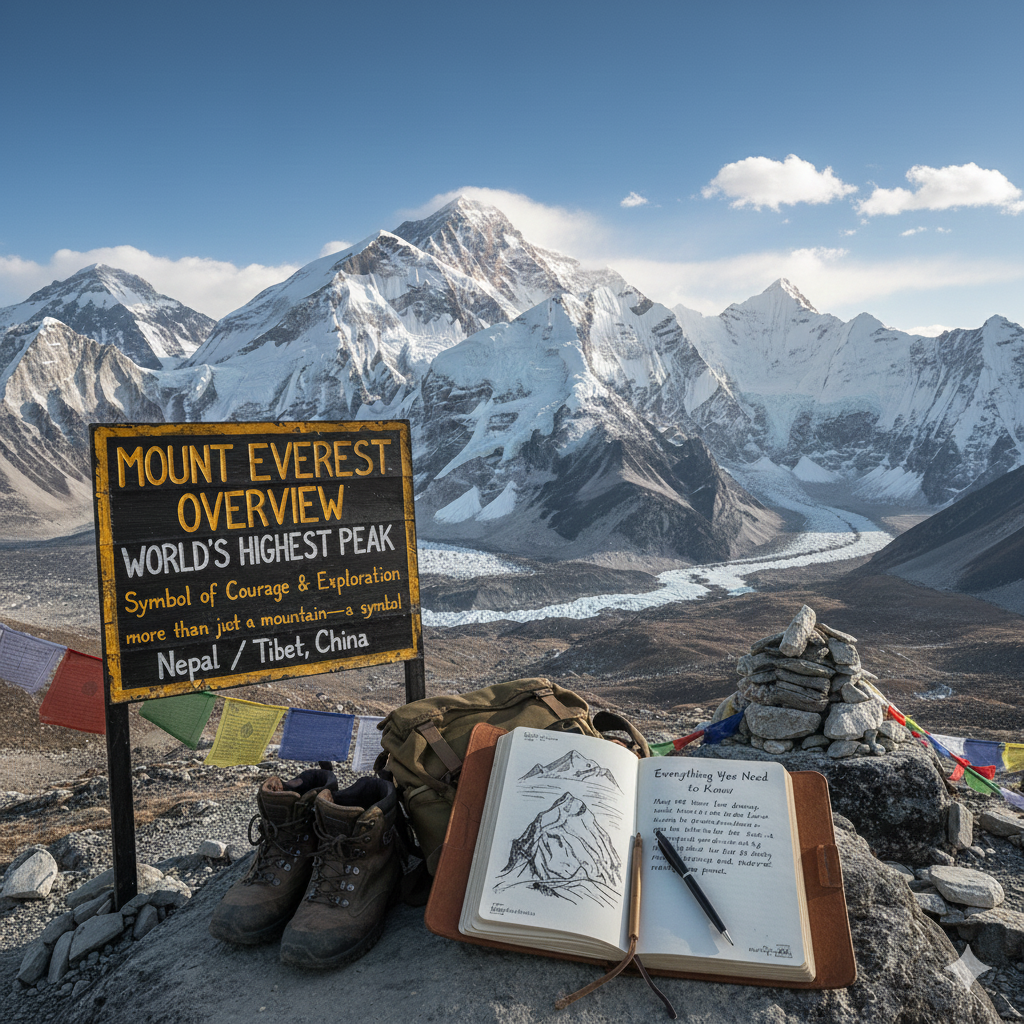
Mount Everest is not just a mountain; rather, it is a symbol of man’s courage, exploration, determination, and bravery. This mountain is always considered a special place in the human imagination. Standing tall between Nepal and the Tibetan region of China. It indicates that a person can achieve anything they want with courage and determination. Even if you never plan to climb it, understanding Everest feels like learning about a piece of Earth’s history and nature’s power.

In this article, we will look at how old Everest is, what its native name means, whether it was a volcano, how it appears from India, its distance, and what kind of weather it gets. We will also discuss briefly one of its strangest places called Rainbow Valley Everest.
Mount Everest?
Mount Everest is the tallest mountain on earth, reaching a height of about 8,848.86 meters (29,031.7 feet) above sea level. It is situated in the Himalayan mountain range, which stretches across several countries in Asia. Everest’s location makes it extremely cold, windy, and unpredictable, and these are the features that make its reputation as both beautiful and dangerous.
People from all over the world dream of standing on it, but even reaching its base camp is a journey filled with deadly challenges.
Mount Everest’s Age?
Although it seems a strange question, the scientists believe that Mount Everest formed around 50 to 60 million years ago. It came into existence when the Indian tectonic plate began crashing into the Eurasian plate, pushing up layers of land that eventually grew into the Himalayas.
In short, Everest is older than almost every animal, plant, and life form we know today.
Another surprising quality of Everest is that it is still rising. Yes, the mountain goes up a few millimeters every year due to ongoing tectonic movement.
The Native Name for Mount Everest
Before the rest of the world called it Mount Everest, the mountain already had deep cultural names. In Nepal, its native name is:
“Sagarmatha”
which means “Forehead in the Sky” or “Goddess of the Sky”.
In Tibet, the mountain is known as
“Chomolungma”
which translates to “Goddess Mother of the World.”
These names show how sacred and spiritual the mountain is for the local people. Long before foreign explorers came, Everest was deemed the most respected and honored. It is still a symbol of fear not only for the native but also for other people. It reflects the powerful force of nature.
Is Mount Everest a Volcano?
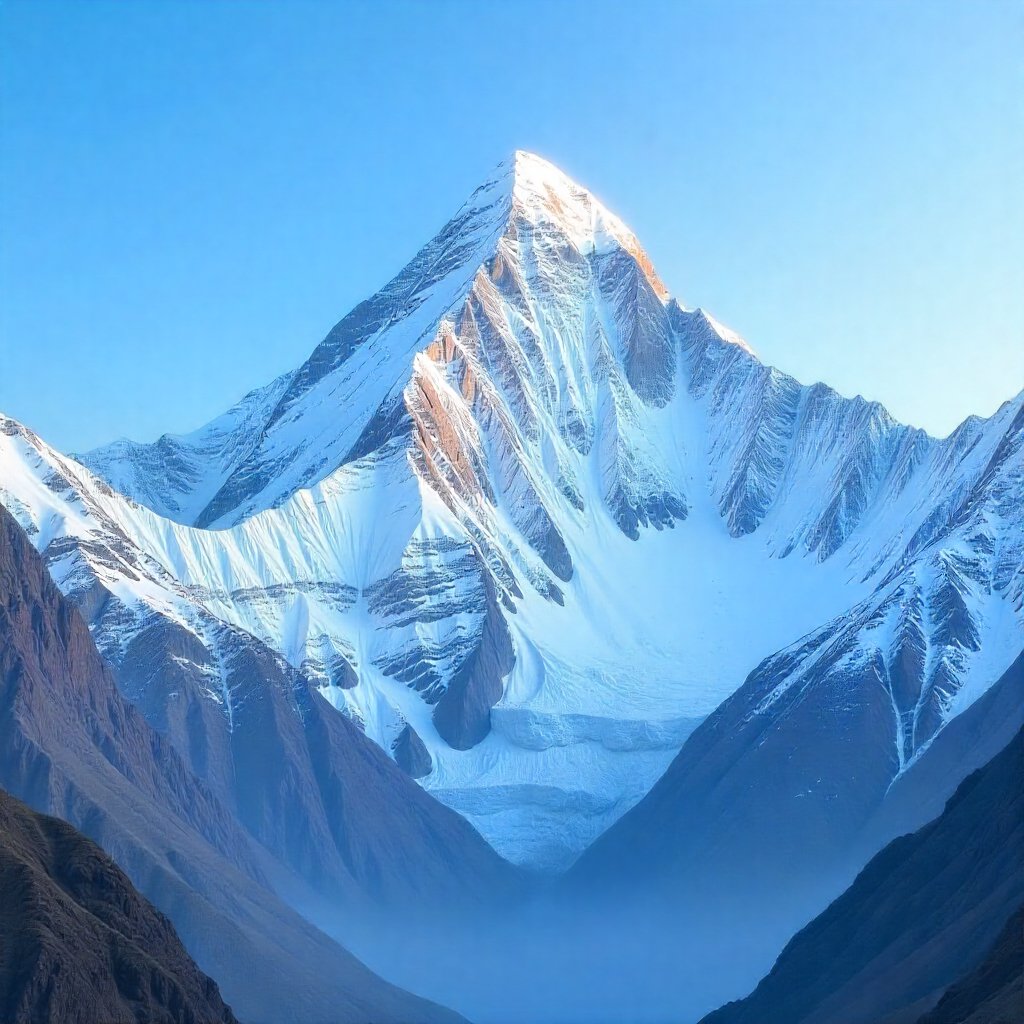
It is also presumed that millions of years ago, Mount Everest was a volcano. But there is no solid evidence or even a clue available that may strengthen this stance.
Instead, it is a fold mountain, created when layers of land were pushed up by colliding with tectonic plates. Volcanic mountains form when molten rocks erupt from beneath the Earth, but Everest has no volcanic activity or lava history. So while it may look mighty and dramatic, it was shaped by pressure, not fire.
Can Mount Everest Be Seen from India?
The answer to this question is simple, and that is yes. Mount Everest can be seen from certain parts of India, but not everywhere. It is visible from Sandakphu, West Bengal, and some high peaks in Sikkim.
These locations offer clear views of not only Everest but also other Himalayan giants like Kanchenjunga and Lhotse. However, the mountain cannot be seen from most Indian cities because it is too far away and hidden behind other peaks.
How Many Miles to Everest?
The distance of Everest can be calculated from different locations as:
- From Kathmandu, Nepal: around 100 miles (160 km)
- From Lukla (the famous trekking town): around 38 miles (61 km)
- From Delhi, India: roughly 670 miles (1,080 km)
- From Bangkok, Thailand: around 1,500 miles (2,400 km)
However, the closest city to Everest is Kathmandu, which is large and the capital of Nepal.
Does Mount Everest Always Have the Same Weather?
Mount Everest does not have the same weather conditions. Weather is one of the most important qualities of the mountain, which makes it almost impossible for mountaineers to summit. The weather on Everest is extremely cold, highly unpredictable, extremely windy and dangerous even in summer.
At the top of the mountain, temperatures can drop to -60°C (-76°F) during winter. Even in the warmest months, it remains below freezing.
Everest also has a strong jet stream, with winds that can reach 100–200 mph. Climbers wait for the ideal timing, which occurred once a year in May. During this short period, climbers feel safe.
What Is Rainbow Valley, Everest?
One of the most talked-about parts of Everest is Rainbow Valley. The name Rainbow Valley refers to a fairy land, but despite the beautiful name, it is not an imaginative tourist point. Rainbow Valley is an area near the summit filled with brightly coloured clothing and gear of climbers who lost their lives on the mountain.
Because recovery is nearly impossible in such dangerous conditions, many bodies remain preserved by the cold. Their insulated jackets, often red, yellow, blue, or green, create a “rainbow” of colours along the route.
Rainbow Valley is an indication that climbing to Everest is tantamount to losing your life. It is such a place where you are going to fight with hostile forces of nature.
Why Everest Still Fascinates the World
Everybody knows the dire consequences of summiting Everest, but despite knowing it, thousands of explorers continue to accept this challenge. Everest has the strange whiff that attracts the pioneers. People visit to experience high-altitude beauty, trek to Everest base camp, challenge themselves, capture views of the Himalayas, and understand local Sherpa culture.
Everest represents adventure, discovery, and the human spirit. Whether you are seeing it from a distance or reading about it, the mountain has a unique way of inspiring people.
Frequently Asked Questions (FAQ)
1. How old is Everest?
In the view of scientists, Everest came into existence around 50 to 60 million years ago.
2. What is the native name for Mt Everest?
In Nepal, it is Sagarmatha.
In Tibet, it is Chomolungma.
3. Is Mount Everest a volcano?
No. It is a fold mountain, not a volcanic one.
4. Can Mount Everest be seen from India?
Yes, from some portion of India, especially Sandakphu (West Bengal) and parts of Sikkim.
5. How many miles to Everest?
Distance can be calculated from locations; however, from Kathmandu, it’s about 100 miles.
6. Does Mount Everest always have the same weather?
No. Its weather is highly unpredictable and can change within minutes.
7. What is Rainbow Valley Everest?
It is a section near the summit where the colourful gear of fallen climbers creates a “rainbow-like” landscape.