





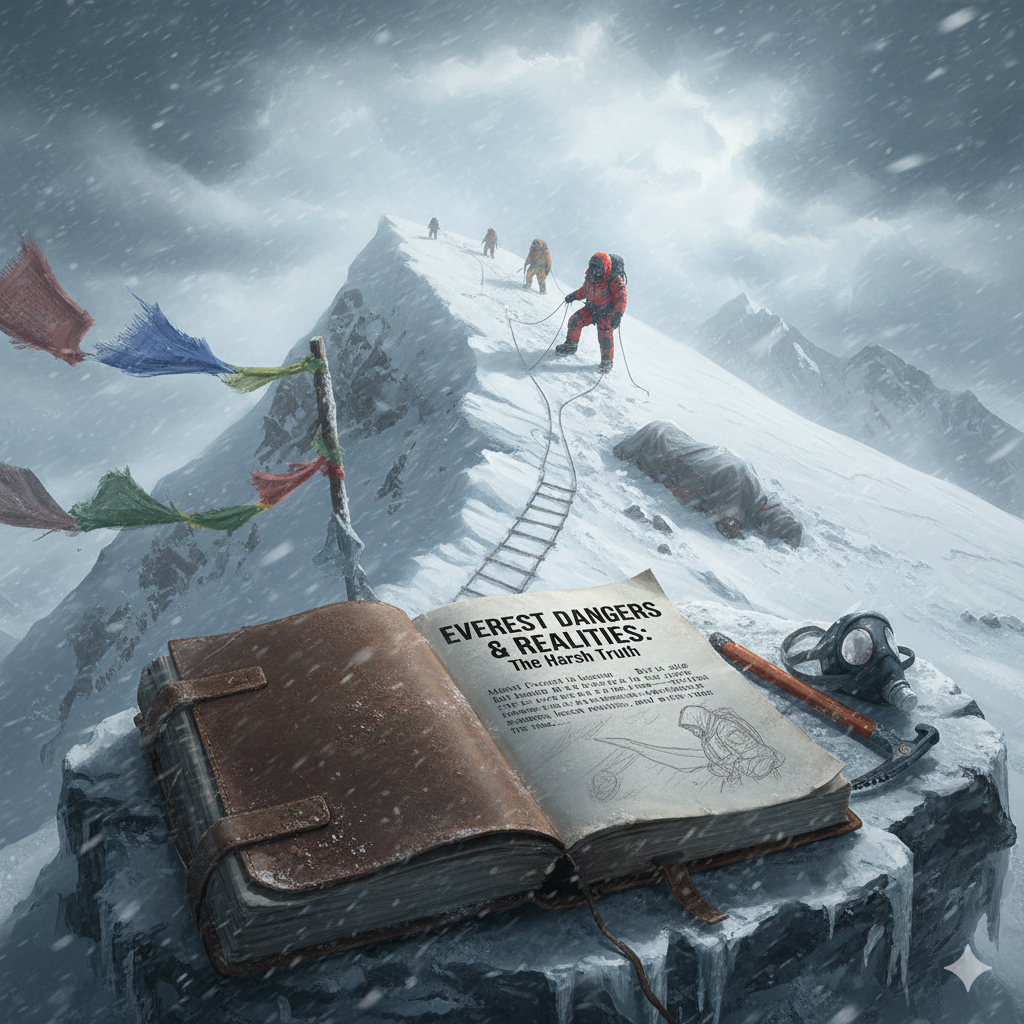
Mount Everest is known across the world as a symbol of adventure, courage, exploration, triumph, and achievement. Many people dream of reaching its peak, standing above the clouds, and touching the “roof of the world”. But behind the beauty of Everest lies a side that is far less talked about. Its dangers, harsh realities, and the risks that every climber must face before even thinking about the summit. Climbing Mount Everest is tantamount to encountering hostile, powerful forces of nature.

Everest is splendid and majestic, but it holds an open challenge. Countless mountaineers accepted this challenge, but a few of them got success, whereas most remained failures, even though the mountain has taken countless lives. It is not because people were unprepared, but because its conditions are totally unpredictable and against the human body.
In this article, we will discuss the real challenges climbers face and everything from altitude sickness to famous landmarks like Rainbow Valley, Green Boots, and the presence of Mount Everest bodies along the climbing routes.
The Reality of Mount Everest Bodies
One of the most difficult truths about Everest is that many climbers who lose their lives on the mountain remain there permanently. Recovering bodies on Everest is extremely dangerous due to freezing temperatures, steep cliffs, and thin air. In many cases, attempting a recovery could put another life at risk.
In the wake of such a situation, a lot of bodies of climbers are still there on the mountain, preserved by the cold. Some of these have become landmarks, guiding climbers on their routes.
Green Boots Everest: The Most Known Landmark
Mount Everest contains a collection of attraction stories and history. Among the well-known figures on Everest is the climber referred to as “Green Boots.” The nickname comes from the bright green mountaineering boots the climber was wearing when he passed away. For years, this figure remained on the Northeast Ridge route and became a tragic yet familiar landmark for those ascending from the Tibetan side.
Green Boots is a symbol of both the human effort to climb Everest and the risks that come with it. His presence on the path has made many climbers reflect deeply on the delicate line between adventure and danger.
Rainbow Valley Everest: Beauty With a Heartbreaking Meaning
This name looks very lovely and indicates that someone is heading towards a fairy tale. But Rainbow Valley Everest is not a joyful place. Located near the summit, Rainbow Valley gets its name from the bright jackets, boots, and climbing gear of climbers who lost their lives there. The harsh conditions prevent recovery in this high-altitude zone, making it one of the saddest yet most visually striking places on the mountain.
The colorful clothing of fallen climbers creates a haunting sight, reminding trekkers of the sacrifices made in pursuit of the world’s highest peak. Rainbow Valley is a powerful message and reflects that Everest is stunning, but it must always be respected.
The Dangers of High Altitude: What Happens to the Body
High altitude is one of the most dangerous features of Everest. In other words, one of the biggest threats on Everest is not the cold, the steep slopes, or even the wind; rather, it is high altitude. The air becomes thinner as you climb, meaning your body receives much less oxygen than it needs. This lack of oxygen affects the human body in several ways and also increases troubles to summit it.
High Altitude Pulmonary Edema (HAPE)
High-altitude pulmonary oedema, commonly called HAPE, is one of the most dangerous medical conditions at high altitude. It occurs when fluid builds up in the lungs, making it difficult or even impossible to breathe.
Signs of HAPE include:
- Severe shortness of breath
- Persistent coughing
- Extreme weakness
- Blue lips or fingernails
These symptoms require immediate treatment, and if not treated quickly, HAPE can be fatal. This is why climbers often descend immediately if they notice such symptoms. They need oxygen, and rapid descent is the main treatment.
Altitude and Dehydration: A Serious Combination
Dehydration is extremely common on Everest. At high altitude:
- You breathe faster
- You lose moisture quickly
- Your body works harder
- The air is extremely dry
All of this leads to increased fluid loss, even if you don’t feel thirsty. Dehydration can cause:
- Dizziness
- Confusion
- Muscle weakness
- Headaches
- Increased risk of altitude sickness
It is advised for climbers to drink at least 4 to 5 liters of water daily so that they can be safe. Even a small drop in hydration levels can become dangerous at such heights.
Altitude and Low Blood Pressure
When climbing Everest, the air pressure drops significantly. This can cause low blood pressure, which may result in:
- Lightheadedness
- Difficulty standing
- Slow reaction time
- Weakness or fainting
Low blood pressure becomes especially risky when combined with exhaustion and extreme cold. Many climbers experience this during acclimatization and must rest or take an immediate decision to descend for their safety.
Does Elevation Affect Weight?
The answer is yes, it does. Most climbers lose weight when attempting Everest. This happens due to:
- Low oxygen levels
- High physical effort
- Loss of appetite
- Increased calorie burning
- Dehydration
The body uses energy much faster at altitude. Some climbers lose 10 to 20 pounds during an expedition. While some of this comes from fat loss, a part of it is also due to the body’s natural response to oxygen shortage.
Why Everest Demands Respect
Since Everest is equivalent to facing powerful forces of nature, weather plays a highly significant role in the success of the mountaineers, as it is completely unpredictable. Weather can change suddenly, temperatures can drop to deadly levels, and even the strongest climbers can face unexpected challenges due to such weather conditions.
While climbing Everest, the most dangerous part of the journey is the “Death Zone”, which is above 8,000 meters, where the human body begins to decline swiftly. The air is simply too thin to survive for long.
Climbing Everest is not just a physical test; it is rather a mental and emotional challenge too. It requires patience, preparation, and deep respect for the mountain and its history.
Frequently Asked Questions (FAQ)
1. Why are there still bodies on Mount Everest?
Because conditions are too dangerous for rescue teams to safely recover them. The freezing temperatures keep them preserved.
2. Who is Green Boots on Everest?
“Green Boots” is the nickname of a climber who passed away on the Northeast Ridge route, known for his bright green shoes.
3. What is Rainbow Valley Everest?
A section near the summit where fallen climbers remain, identified by their colorful clothing and gear.
4. What is high-altitude pulmonary oedema?
A dangerous condition where fluid enters the lungs due to oxygen shortage at high altitude.
5. Does altitude cause dehydration?
Yes. Thin, dry air and rapid breathing at altitude cause faster moisture loss.
6. Can altitude cause low blood pressure?
Yes. Lower air pressure at high altitude can drop blood pressure, causing weakness or dizziness.
7. Does elevation affect weight?
Climbers often lose weight due to increased calorie burning, low appetite, and dehydration.