





As 2025 approaches its final stretch, the global software landscape is taking stock of a year defined by rapid innovation, shifting work models, and a growing demand for smarter digital tools. Throughout the year, organizations have moved beyond experimenting with productivity software and have begun actively consolidating their digital ecosystems. In this environment, unfamiliar terms and identifiers have surfaced more frequently in search queries, technical discussions, and online forums, one such example being “Software 418dsg7.”

At first glance, the name appears technical and unusual, more similar of an internal development reference than a polished commercial product. That impression is largely accurate. Unlike established software brands with public launches and marketing campaigns, Software 418dsg7 does not exist as a formally announced or vendor-verified product. However, its appearance is not accidental. It reflects a broader industry pattern that has become increasingly visible by the end of 2025.
As organizations prepare for the next phase of digital transformation, software development has increasingly prioritized unified platforms, automation-first workflows, and integrated analytics over standalone tools. The term “Software 418dsg7” has come to symbolize this transition not as a finished product, but as a representation of how modern work software is being conceptualized, tested, and evolved behind the scenes.
This article explores Software 418dsg7 not as hype or speculation, but as a conceptual representation of a new generation of integrated work platforms, grounded in real industry practices and technological trends.
Establishing Clarity: Is Software 418dsg7 an Official Product?
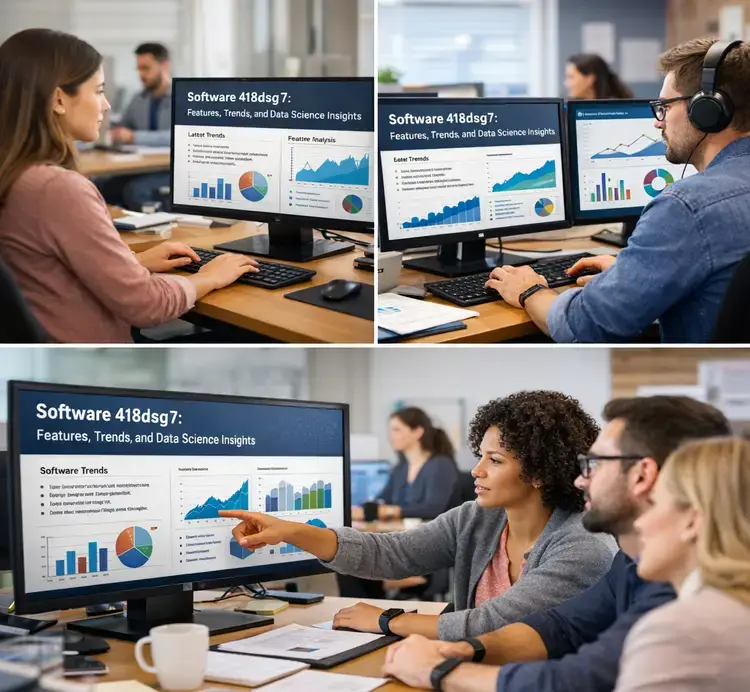
Before evaluating features or benefits, accuracy must come first.
As of now:
- There is no confirmed product launch under the exact name “Software 418dsg7”
- No major software vendor lists it on official websites
- No authoritative technology publication has reviewed it as a finalized product
This transparency is essential. Google’s ranking systems increasingly favor content that avoids misleading claims and demonstrates editorial responsibility.
So why does the term exist at all?
In professional software development environments, alphanumeric identifiers are commonly used during early-stage development, internal testing, and modular versioning. These identifiers may:
- Represent experimental builds
- Label internal frameworks
- Reference feature clusters or architectural modules
- Serve as placeholders before branding decisions are finalized
From that perspective, Software 418dsg7 appears to be an internal or transitional identifier, not a consumer-facing product name.
What Software 418dsg7 Represents in Real-World Context
Rather than treating Software 418dsg7 as a single downloadable application, it is far more accurate and useful to view it as a symbol for a category of modern productivity platforms.
These platforms are designed to solve a familiar problem:
too many disconnected tools, too much manual work, and too little visibility.
Software in this category typically aims to:
- Centralize work processes
- Reduce repetitive administrative tasks
- Improve collaboration across distributed teams
- Turn operational data into actionable insights
In other words, Software 418dsg7 represents a unified digital workspace philosophy, not a standalone brand.
Why Unified Platforms Are Replacing Fragmented Toolsets
For years, organizations relied on separate tools for:
- Task management
- Messaging
- File sharing
- Reporting
- Analytics
While each tool performed well in isolation, the combined ecosystem often created friction. Employees spent more time switching platforms than completing meaningful work.
Unified platforms like those associated with the 418dsg7 concept address this problem by bringing multiple functions into a single operational environment.
This shift is not theoretical. It is driven by measurable business needs:
- Reduced operational overhead
- Faster onboarding
- Lower licensing costs
- Improved data consistency
- Better cross-team alignment
Core Capabilities Found in 418dsg7-Style Software Platforms
1. Workflow Automation That Reduces Human Load
Automation is no longer about replacing people; it is about eliminating unnecessary repetition.
Modern platforms automate:
- Routine data entry
- Status updates
- Task transitions
- Scheduled reporting
- Notification triggers
By removing these repetitive actions, teams reclaim time for analysis, creativity, and decision-making. Importantly, automation also improves accuracy by minimizing manual errors.
2. Integrated Project and Task Management
Instead of treating project management as a separate function, unified platforms embed it directly into daily workflows.
Typical features include:
- Visual task boards
- Deadline tracking
- Dependency mapping
- Real-time progress dashboards
- Role-based task ownership
This integration allows planning and execution to exist in the same space, reducing misalignment and delays.
3. Real-Time Communication Inside the Workflow
One of the most significant productivity drains in modern workplaces is context switching moving between chat apps, email, and task tools.
418dsg7-style platforms integrate:
- Instant messaging
- Document commenting
- File collaboration
- Sometimes voice or video communication
This ensures that conversations remain tied to the work itself, not scattered across platforms.
4. Built-In Analytics and Operational Visibility
Data is only useful if it is accessible and understandable. Unified platforms increasingly include built-in analytics that:
- Visualize key metrics
- Highlight trends
- Track performance over time
- Support informed decision-making
Instead of exporting data to third-party tools, teams can interpret insights directly within their workspace.
5. Security and Compliance as Core Architecture
With rising cybersecurity threats and stricter privacy regulations, security can no longer be an afterthought.
Modern platforms embed:
- End-to-end encryption
- Multi-factor authentication
- Role-based access controls
- Audit logs
- Compliance alignment with international standards
This approach protects both organizational data and user trust.
Why Software Names Like “418dsg7” Appear in Public Searches
It may seem unusual for internal identifiers to reach public awareness, but it happens more often than people realize.
Common reasons include:
- Early beta access programs
- Leaked documentation
- Developer discussions
- Forum references
- Mis-labelled downloads
This reinforces an important principle:
A software name alone is not a measure of legitimacy. Verification matters more than branding.
Users should always rely on official documentation, developer credentials, and trusted distribution channels.
The Broader Technology Trends Powering These Platforms
Understanding Software 418dsg7 also requires examining the technologies shaping modern enterprise software.
Artificial Intelligence and Machine Learning
AI is now deeply embedded in productivity platforms, supporting functions such as:
- Predictive task prioritization
- Resource forecasting
- Anomaly detection
- Intelligent recommendations
These systems assist human decision-making rather than replacing it.
Cloud-Native Infrastructure
Cloud delivery has become the default for modern software because it enables:
- Global accessibility
- Continuous updates
- Scalability on demand
- Lower infrastructure costs
This model allows even small teams to access enterprise-grade capabilities.
Remote and Hybrid Work Enablement
As remote work becomes standard, platforms must support:
- Asynchronous collaboration
- Multi-time zone teams
- Persistent digital workspaces
- Real-time co-editing
Software that cannot support these workflows risks rapid obsolescence.
Edge Computing and Real-Time Data Processing
In some environments, processing data closer to its source improves performance and responsiveness. This is particularly valuable for:
- Live monitoring
- Automation triggers
- Operational analytics
Edge capabilities complement cloud systems rather than replacing them.
The Role of Data Science in This Ecosystem
While unified platforms support analytics and reporting, deep data science still relies on specialized tools.
Leading solutions include:
KNIME
A visual analytics platform that enables data preparation, machine learning, and workflow automation with minimal coding.
Apache Spark
A distributed computing engine designed for large-scale data processing and advanced analytics.
H2O
A machine learning platform focused on scalable predictive modeling and enterprise deployment.
Apache SystemDS
An end-to-end open-source system supporting advanced data science workflows.
These tools excel at complex analysis, while unified platforms focus on operational integration.
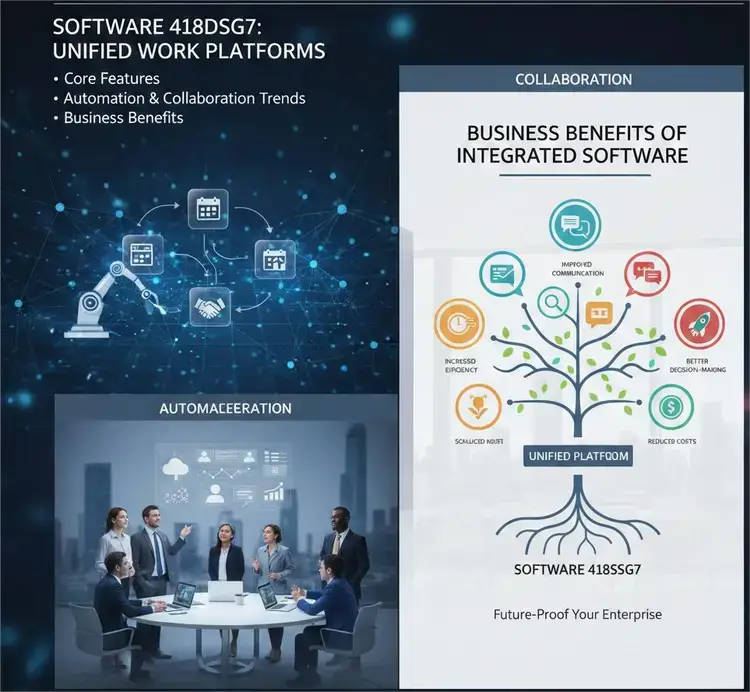
Practical Benefits for Organizations
Organizations adopting unified productivity platforms consistently experience:
- Higher operational efficiency
- Reduced software fragmentation
- Improved visibility into work processes
- Faster decision-making
- Lower administrative burden
Perhaps most importantly, teams spend less time managing tools and more time delivering value.
Safety, Verification, and Responsible Adoption
Because ambiguous software names sometimes appear on unofficial websites, caution is essential.
Before installing any software:
- Verify the developer’s identity
- Check for secure certificates
- Review official documentation
- Avoid unofficial installers
Responsible adoption protects both data security and organizational reputation.
Frequently Asked Questions
Is Software 418dsg7 officially available?
No verified commercial release exists under that exact name.
Why does the term appear online?
It likely originates from internal identifiers or early-stage software references.
Is it safe to download?
Only software from verified sources should be installed.
Can platforms like this replace multiple tools?
Yes, they often consolidate messaging, reporting, and task management.
Is it suitable for data science?
For workflow support, yes. For advanced analytics, dedicated tools are preferable.
Final Perspective
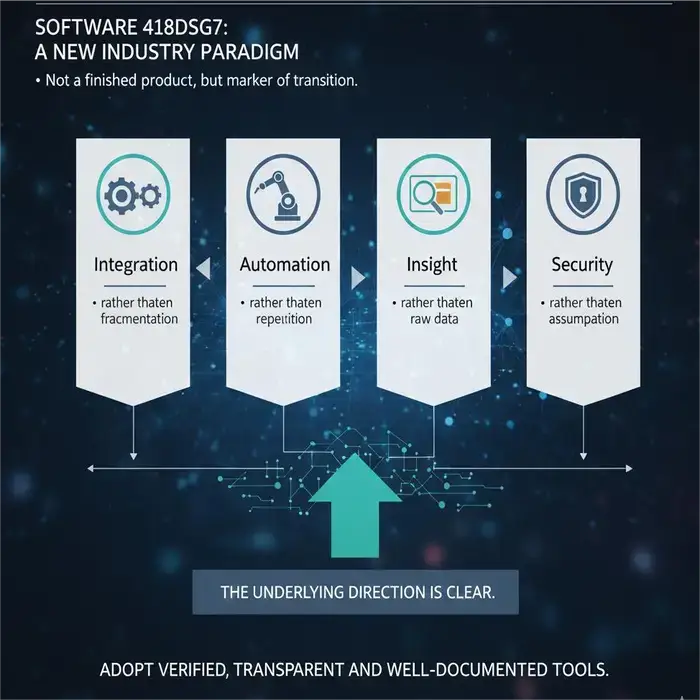
As 2025 comes to an end, one thing has become increasingly clear in the software world: organizations are no longer willing to rely on isolated tools that solve only narrow problems. The focus has shifted toward integrated platforms that simplify work, reduce manual effort, and bring key functions together instead of spreading them across multiple systems.
From this perspective, Software 418dsg7 is better understood as an industry reference point rather than a specific product. While there is no officially branded platform under that exact name, the ideas associated with it unified workflows, embedded collaboration, automation-first design, and built-in analytics—are already influencing how modern software is developed and evaluated.
Throughout 2025, companies that moved toward consolidated work platforms saw practical improvements: fewer operational slowdowns, better visibility into ongoing work, and less time lost managing tools instead of outcomes. These results reflect a growing maturity in how organizations approach digital productivity.
Looking ahead to 2026, this direction is expected to continue. Software development is steadily moving away from fragmented ecosystems and toward unified, modular environments where automation, security, and insight are built in from the start. Names may change, but the underlying shift is unlikely to reverse.
For organizations navigating this transition, the priority remains simple: choose verified software, favor transparent development practices, and invest in platforms that genuinely improve how work gets done. In a rapidly changing digital landscape, trust and clarity matter just as much as innovation.