





This is one of the most searched dental questions online, and for good reason.

People often ignore tooth pain, hoping it will disappear. Sometimes it does by taking painkiller tablets. That silence feels like relief. But in fact, it can mean the infection has moved deeper and will develop worsening pain.
So let’s answer the question honestly and responsibly:
How long until a tooth infection kills you?
There is no exact time frame. But in severe cases, a tooth infection can become life-threatening within days, and in rare situations, within 24–72 hours once it spreads beyond the tooth.
This article explains the timeline, what speeds things up, and when a tooth infection turns dangerous.
The Short Answer (No Panic, Just Facts)
- Many tooth infections stay localized for days or weeks
- Some spread rapidly within a few days
- Death is rare, but documented
- Delay in treatment is the biggest risk factor
A tooth infection does not need months to become serious. Once bacteria escape the tooth, time matters.
What Happens First: The Early Stage (Days 1–3)

At the beginning, symptoms usually feel manageable.
Common early signs:
- Persistent toothache
- Sensitivity to heat or cold
- Mild gum swelling
- Pressure pain while chewing
At this stage, bacteria infect the pulp (the inner nerve area). The body tries to fight back. Pain increases because pressure builds inside the tooth.
Many people take painkillers and move on. Taking painkillers is not proper treatment; however, it extends relief promptly.
The Abscess Stage (Days 3–7)
If untreated, the infection forms an abscess, a pocket of pus.
Symptoms often include:
- Throbbing pain that radiates to jaw or ear
- Visible gum swelling or a pimple-like bump
- Bad taste in the mouth
- Fever or fatigue
This is the danger zone.
Once pus forms, bacteria have a direct path to surrounding tissues and blood vessels.
At this point, home remedies stop helping.
The Spreading Stage (After 1 Week or Less)
This is where timelines vary and where real danger begins.
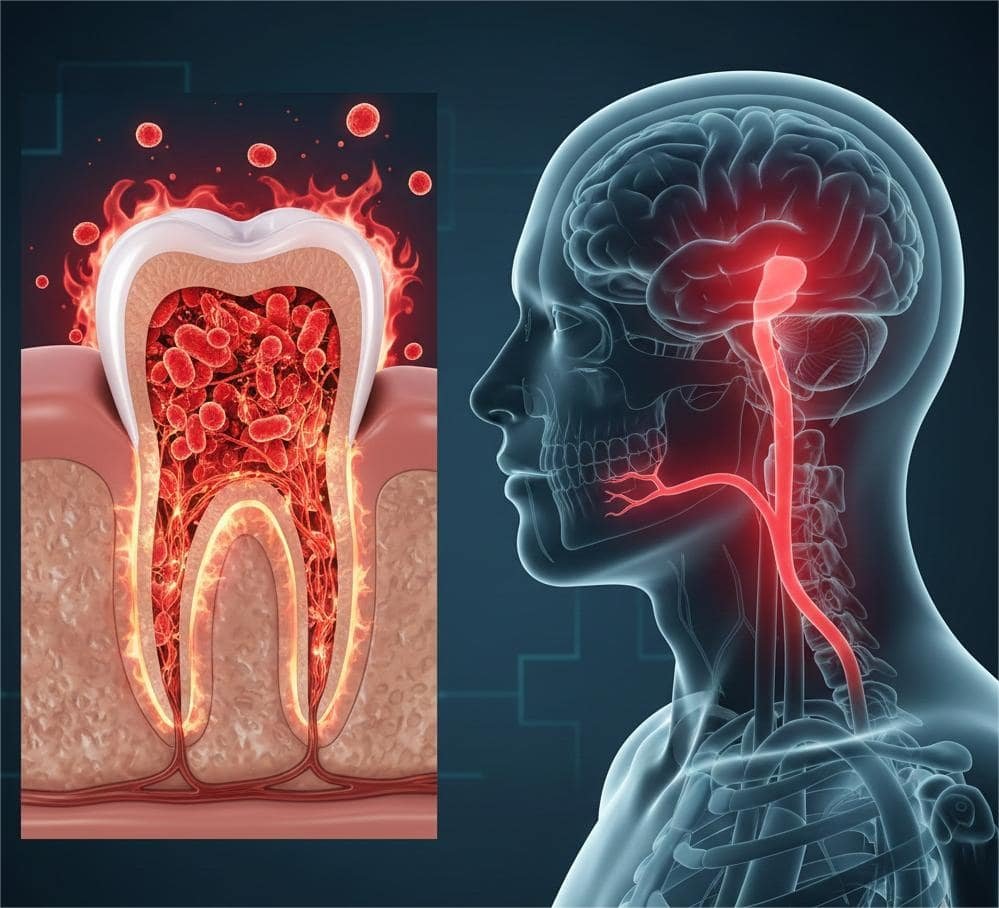
If the abscess breaks or spreads internally, bacteria can move to:
- Jawbone
- Neck spaces
- Sinuses
- Bloodstream
Some people reach this stage within a week; others sooner.
Pain may suddenly decrease here. That does not mean healing. It often means the nerve has died.
This false calm causes many people to wait longer.
How Fast Can a Tooth Infection Kill You?
In extreme cases, progression can be fast.
Medical case reports show:
- Severe infections turning fatal in 2–3 days
- Death occurring within weeks after symptoms began
- Healthy young adults affected not only elderly patients
Once infection enters the bloodstream or airway, the body can decline rapidly.
That is why doctors treat spreading dental infections as emergencies.
What Speeds Up a Tooth Infection?
Some factors make infections move faster and hit harder.
- Weak Immune System
Conditions like
- Diabetes
- Cancer treatment
- Autoimmune diseases
reduce the body’s ability to control bacteria.
- Smoking
Smoking reduces blood flow and delays healing.
- Ignoring Symptoms
Painkillers mask pain but do nothing to stop infection.
- Infection Location
Upper teeth sit close to the brain and sinuses.
Lower teeth drain toward the neck and airway.
Both paths carry serious risks.
When a Tooth Infection Becomes Deadly
A tooth infection becomes life-threatening when it causes complications like:
Sepsis
A body-wide inflammatory response.
Warning signs:
- High fever
- Rapid heart rate
- Confusion
- Low blood pressure
Sepsis requires immediate hospital care.
Ludwig’s Angina
A fast-spreading infection under the tongue.
Symptoms include:
- Hard neck swelling
- Trouble breathing
- Slurred speech
Airway blockage can occur quickly.
Brain Infection
Bacteria spread from the upper teeth to the brain.
This can cause:
- Severe headaches
- Vomiting
- Vision problems
- Seizures
These conditions explain how a “simple tooth infection” turns into a fatal and critical condition.
Tooth Infections in Diabetic Patients
People with diabetes face a higher risk of severe and fast-spreading tooth infections. Elevated blood sugar levels weaken immune response and slow healing, allowing bacteria to multiply more quickly. Even mild dental pain or swelling in diabetic patients should be treated as urgent. Delaying care significantly increases the risk of abscess formation, sepsis, and hospitalisation. Diabetic patients should seek dental or medical attention immediately if fever, facial swelling, or worsening pain develops.
Tooth Infections in Older Adults
Older adults are more vulnerable to serious complications from tooth infections. Age-related immune decline, chronic medical conditions, and reduced pain sensitivity can cause infections to progress with fewer early warning signs. In elderly patients, symptoms such as facial swelling, confusion, fatigue, or difficulty swallowing may signal a medical emergency even if tooth pain seems mild. Prompt evaluation is critical to prevent airway compromise and systemic infection.
How Do You Know Time Is Running Out?
Seek emergency care immediately if you have:
- Facial or neck swelling
- Fever above 101°F (38.3°C)
- Difficulty breathing or swallowing
- Rapid worsening pain
- Confusion or extreme fatigue
These signs mean the infection has moved beyond dental territory.
Can Antibiotics Buy You Time?
Sometimes, but not safely on their own.
Antibiotics:
- Reduce bacterial spread
- Lower fever and swelling
- Do not remove infected tissue
Without drainage, a root canal, or extraction, the infection often returns.
Dentists use antibiotics as support, not as the final solution.
Why Waiting Is the Biggest Mistake
People delay treatment because:
- Pain comes and goes
- Fear of dental procedures
- Cost concerns
- Busy schedules
Unfortunately, infections do not respect calendars.
Care delay increases:
- Treatment complexity
- Cost
- Risk to life
Early treatment is faster, cheaper, and safer.
How Dentists Stop the Clock
Dentists stop infection progression by:
- Draining the abscess
- Performing a root canal
- Removing the infected tooth
- Prescribing targeted antibiotics
Once the source is removed, the body recovers quickly.
Most patients feel relief within 24–48 hours after proper treatment.
Is Death from Tooth Infection Common?
The answer to this question is no, as deaths from tooth infections are rare, especially in countries with access to dental care.
However:
- “Rare” does not mean impossible
- Most fatal cases involved delayed treatment
- Almost all were preventable
That is the key takeaway.
How to Reduce the Risk of a Dangerous Tooth Infection
While not all tooth infections are preventable, early action greatly reduces risk. Treat cavities and dental pain promptly, avoid relying on painkillers to mask symptoms, and seek care immediately if swelling or fever occurs. Individuals with diabetes, weakened immunity, or advanced age should not delay treatment, as infections can escalate more rapidly in these groups.
Final Thoughts
A tooth infection does not follow a fixed timeline. Some linger quietly. Others escalate fast. You cannot predict which one you have without a dental test. You should remember one thing: pain disappearing does not mean danger is gone.
This content is for informational and awareness purposes only and does not replace professional medical or dental advice. Always consult a qualified dentist or physician for diagnosis and treatment.